What Is a Solar Cell? The Tiny Silicon Engine Turning Sunlight into Energy
Most people have seen solar panels on rooftops, schools, factories, and solar farms.
But inside every solar panel is something much smaller and more important: a solar cell.
A solar cell is the part of a solar panel that actually turns sunlight into electricity. You can think of it as the tiny engine inside the panel. The panel protects, connects, and supports the cells, but the cell is where the energy generation happens.
At Sunbucks, we focus on the solar cell because it is the smallest real energy-producing unit inside a solar panel. A Sunbucks cell is not just a symbol of clean energy. It is a real physical part of a solar system that helps produce electricity from sunlight.
Related reading: Once you understand the cell, see how it fits into The Sunbucks Solar Cell Rental Model: Clean Energy Without Installing Panels.
The Simple Version: A Solar Cell Catches Sunlight
A solar cell works by catching light from the sun and turning part of that light into electrical energy.
The sun sends energy to Earth in the form of light. When that light hits a solar cell, the cell absorbs some of the energy. That energy wakes up tiny particles inside the cell called electrons.
Once those electrons start moving in the right direction, they create electricity.
Simple idea: Sunlight hits the solar cell. The cell moves electrons. Moving electrons create electricity.
That is why solar cells are so powerful. They do not need fuel. They do not need fire. They do not need moving parts. They simply use sunlight and material science.
Why Solar Cells Are Usually Made from Silicon
Most solar cells are made from silicon.
Silicon is one of the most useful materials on Earth. It is found in sand, quartz, and many rocks. It is not rare or exotic. Silicon is not the most common element on Earth, but it is one of the most abundant elements in the Earth's crust.
That matters because if we want to build clean energy for the world, we need materials that are available at large scale.
Imagine trying to power the world with something extremely rare. It would be expensive, difficult to produce, and hard to scale.
Silicon is different. It is abundant, stable, long-lasting, scalable, and has the right electrical behaviour for solar energy.
That is why silicon became the main material used in solar cells.
Why Silicon Is So Good for Solar Energy
Silicon is special because it sits in a useful middle ground.
Some materials are good conductors. That means electricity can move through them easily. Copper is a good example.
Some materials are insulators. That means electricity does not move through them easily. Rubber and glass are examples.
Silicon is different. It is not fully a conductor and not fully an insulator. It is something in between.
That type of material is called a semiconductor.
What Is a Semiconductor?
A semiconductor is a material that can sometimes let electricity flow and sometimes slow it down, depending on how it is treated.
A simple way to think about it is this:
| Material type | Simple meaning |
|---|---|
| Conductor | Like an open road. Electricity moves easily. |
| Insulator | Like a closed road. Electricity is blocked. |
| Semiconductor | Like a road with traffic lights. Electricity can be controlled. |
That control is what makes semiconductors so useful. They are used in solar cells, computer chips, phones, cars, and almost every modern electronic device.
In a solar cell, silicon acts like a smart gate for electricity. When sunlight hits the cell, the silicon helps release electrons and guide them so they flow as useful electrical current.
The Science: How Light Becomes Electricity
Now let's go one level deeper.
Light is made of tiny packets of energy called photons.
When photons from sunlight hit a solar cell, some of them are absorbed by the silicon. If a photon has enough energy, it can knock an electron loose inside the material.
That loose electron can then move.
But movement alone is not enough. The solar cell needs to push the electrons in one direction so they become an electric current.
To do this, the silicon cell is built with two slightly different layers. One layer is made to have extra electrons. The other layer is made to have space for electrons.
Where these two layers meet, an internal electric field is created. This field acts like a one-way guide. It helps separate the electrons and push them into a useful flow.
That flow is electricity.
This process is called the photovoltaic effect.
Photo means light. Voltaic means electricity. So photovoltaic simply means: light becoming electricity.
Why Solar Cells Have No Moving Parts
One of the most impressive things about a solar cell is that it has no moving parts.
A wind turbine needs blades. A generator needs rotation. An engine needs fuel and movement. A solar cell just sits there and works when sunlight hits it.
This makes solar cells simple, quiet, and reliable. There is no engine to start. No fuel to burn. No spinning parts inside the cell.
Of course, a full solar project still needs good design, cables, inverters, monitoring, cleaning, and maintenance. But the basic solar cell itself is incredibly elegant.
It turns sunlight directly into electricity using physics.
Why This Makes Solar Perfect for Long-Term Energy Generation
Solar cells are especially good for long-term energy generation because they combine three powerful things:
- A free energy source: The sun sends energy every day. We do not have to mine sunlight, ship it, or burn it.
- An abundant material: Silicon is widely available and can be processed into solar-grade material at large scale.
- A simple working principle: Solar cells generate electricity without fuel and without moving mechanical parts.
This is why solar energy has become one of the most important energy technologies in the world. It is not just because solar is clean. It is because solar is practical.
From One Cell to a Full Solar Panel
One solar cell does not usually produce enough electricity on its own for a building.
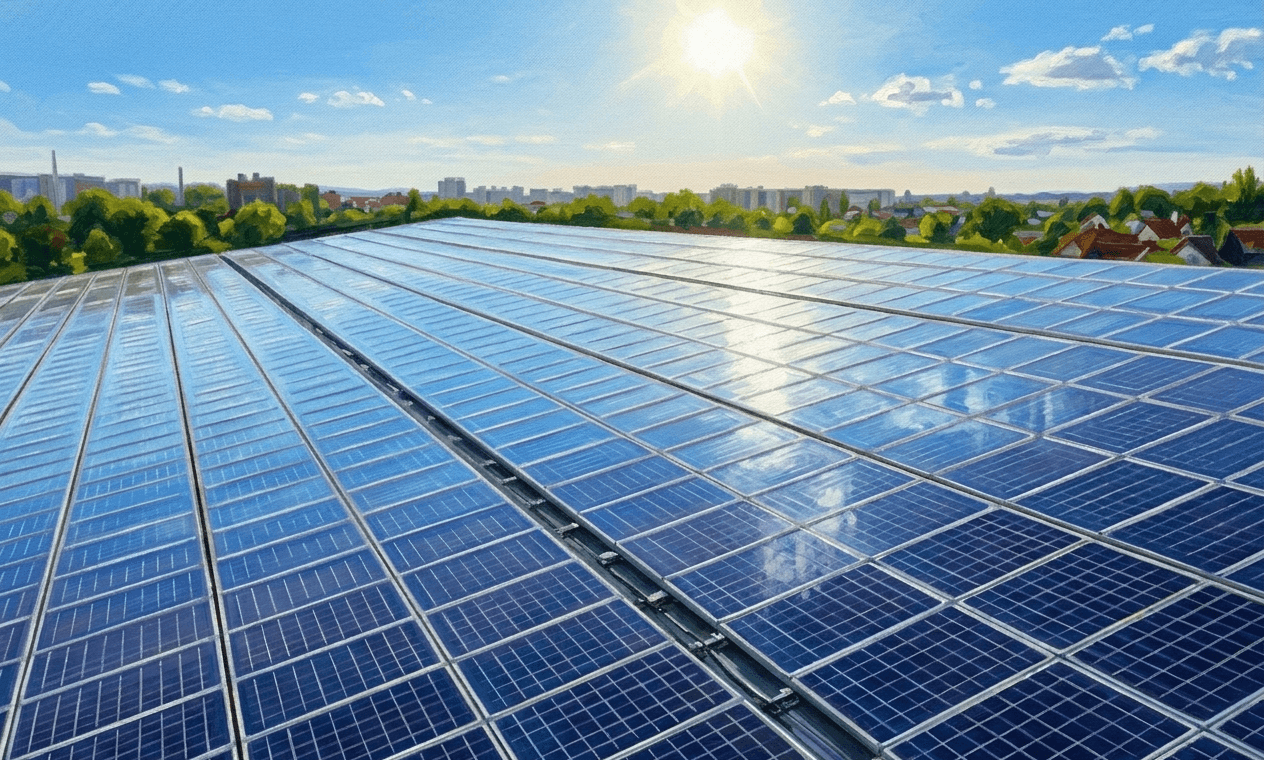
So many cells are connected together to make a solar module, often called a solar panel.
Then many panels can be connected together to form a solar installation.
That installation can power a school, a business, a factory, or even feed energy into the grid.
Solar cell -> solar panel -> solar installation -> usable electricity
The solar cell is the starting point.
Without the cell, there is no solar panel. Without the solar panel, there is no solar project. Without the solar project, sunlight is not turned into usable electricity.
That is why the cell matters so much.
Why Sunbucks Focuses on the Cell
At Sunbucks, we focus on the solar cell because it is the core energy-producing unit.
A solar panel is made from many cells, but each cell plays a role in turning sunlight into power. By connecting people to specific serialized solar cells, Sunbucks makes solar feel more real, more understandable, and more personal.
Instead of saying, "somewhere there is a solar project," the Sunbucks model is built around a clearer idea:
This is your specific solar cell. It is part of a real installation. Sunbucks manages it. The cell helps generate clean energy.
That is much easier to understand than complicated energy finance.
Why This Matters for the Future
The world needs more clean energy.
But clean energy should not only be for people who own a house, have a perfect roof, or understand electrical engineering.
Solar cells make it possible to turn one of the world's most available resources - sunlight - into electricity using one of the Earth's most abundant materials: silicon.
That is a powerful combination.
Sunlight is everywhere. Silicon is abundant. Solar cells are proven. And the technology keeps improving.
That is why solar cells are not just small pieces of technology. They are one of the building blocks of the clean energy future.
Final Thought
A solar cell may look simple from the outside.
But inside, it is doing something amazing.
It takes sunlight, uses the special properties of silicon, moves electrons, and creates electricity.
No fuel. No smoke. No moving parts. Just sunlight, science, and smart material design.
That is why the solar cell is one of the most important inventions in modern energy.
And that is why Sunbucks starts with the cell.
Frequently Asked Questions
What is a solar cell?
A solar cell is the part of a solar panel that turns sunlight into electricity. Many solar cells are connected together to make one solar panel.
What is a solar cell made of?
Most solar cells are made from silicon, a widely available material found in sand, quartz, and many rocks.
Why is silicon used in solar cells?
Silicon is used because it is abundant, stable, long-lasting, and behaves as a semiconductor. That means its electrical behaviour can be controlled in a useful way.
What is a semiconductor?
A semiconductor is a material between a conductor and an insulator. It can control how electricity moves, which makes it perfect for solar cells and computer chips.
How does a solar cell create electricity?
Sunlight hits the solar cell and gives energy to electrons inside the silicon. The cell then guides those electrons into a flow, which creates electrical current.
Is a solar cell the same as a solar panel?
No. A solar cell is one small energy-producing unit. A solar panel is made from many solar cells connected together.
Want to see how a real solar cell can be part of a managed clean-energy project? Explore the Sunbucks solar cell rental model and see how it works.