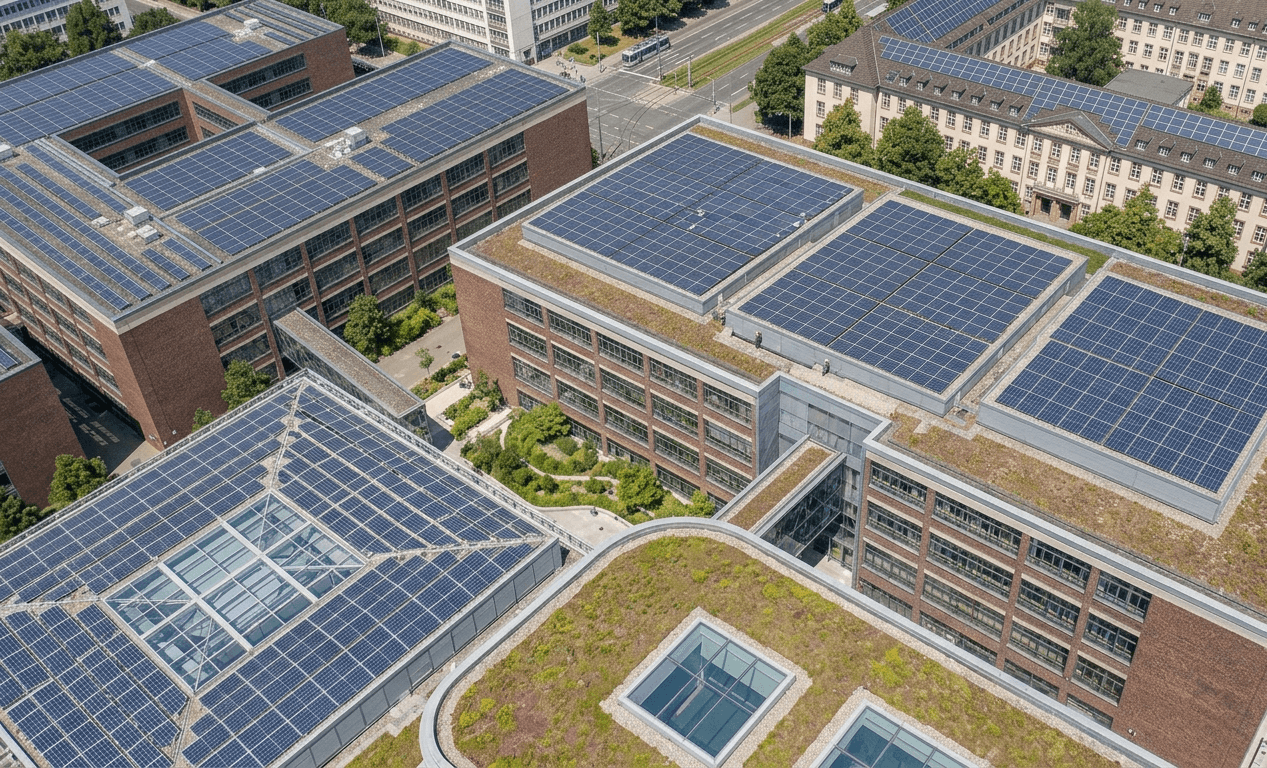
Can we live without fossil fuels? Not overnight - but we can live with far less coal, oil, and gas than we use today. The Sun already gives Earth more energy than humanity could ever need.
Fossil fuels have made a lot of people very rich.
Coal, oil, and gas helped build the modern world. They powered factories, cars, ships, planes, homes, and electricity grids. There is no point pretending they were not useful.
But there is a problem.
The profits are being taken now, while the damage is being passed to the next generation.
That is not fair.
Fossil fuels are not really cheap
Fossil fuels look cheap because the full cost is not paid at the pump, on the electricity bill, or by the companies selling them.
The real cost comes later.
It comes through air pollution, extreme weather, damaged infrastructure, higher insurance costs, droughts, floods, heatwaves, and the huge cost of rebuilding energy systems that should have been changed earlier.
So when people say fossil fuels are cheap, the honest answer is:
Cheap for who?
Cheap for the person selling them today?
Or cheap for the next generation that has to clean up the damage?
The global energy system is still heavily dependent on fossil fuels. The Energy Institute's Statistical Review of World Energy shows that global energy demand remains at record levels, while fossil fuels still dominate the world's energy mix and emissions remain a major problem.
That is why the question "can we live without fossil fuels?" matters. It is not just an environmental question. It is an economic and generational question.
The Sun already gives us more than enough energy
The strange thing is that Earth is not short of energy.
NASA explains that the Earth system absorbs an average of about 240 watts of solar power per square metre across the planet. That sunlight warms the Earth, drives the climate, fuels evaporation, supports photosynthesis, and powers life itself.
Across the whole planet, that equals roughly 122,000 terawatts of solar power being absorbed by Earth on average.
Humanity uses only a tiny fraction of that amount. Global energy supply is measured in hundreds of exajoules per year, which works out to roughly 18 to 20 terawatts on average, based on global energy consumption data such as the Energy Institute's Statistical Review of World Energy.
That means the solar energy absorbed by Earth is around 6,000 times greater than humanity's current average energy use.
In simple terms:
One day of sunlight contains enough energy to power human civilisation for many years, if we could capture and use it properly.
Of course, we cannot capture all sunlight. We do not need to. We only need to capture a tiny part of it much better than we do today.
This is why solar energy is one of the most obvious alternatives to fossil fuels.
The Sun is already doing fusion for free
People are spending huge amounts of money trying to develop fusion energy.
Fusion is the same process that powers stars, including our Sun. The U.S. Department of Energy explains that fusion reactions power the Sun and other stars by merging light nuclei and releasing energy.
So the question is obvious:
Why are we spending so much money trying to copy the Sun, when the Sun is already doing the job for free?
That does not mean fusion research is useless. Maybe one day it will become very important.
But we should also be realistic.
Nuclear power has been around for more than 70 years. The first nuclear reactor to produce electricity started up in the USA in December 1951, and the first nuclear-powered electricity generator began operating in Obninsk in 1954, according to the World Nuclear Association's history of nuclear energy.
But even after all that time, nuclear power is still not something most countries can easily build, afford, regulate, or operate. It requires huge capital, advanced engineering, long approval processes, skilled operators, long-term safety systems, and political approval.
Fusion would likely be even more advanced, expensive, and difficult to deploy. Future fusion plants may need extreme technical conditions, with the U.S. Department of Energy noting that commercial fusion concepts may require temperatures of around 100 million degrees Celsius.
So even if fusion becomes successful, it may not be used first in the places that need new clean energy the most - emerging and growing countries where electricity demand is rising quickly and where affordable, practical power is needed now.
Solar power works now.
The Sun rises every day. It sends energy to Earth for free. Solar panels already exist. We already know how to capture that energy.
We do not need to wait for a perfect future technology before using the giant fusion reactor already above us.
The problem is not energy. The problem is access.
The world has enough energy.
The problem is how we collect it, store it, move it, and who gets to benefit from it.
Fossil fuels created a system where a small number of companies and countries control the fuel, and everyone else pays for energy.
Solar can change that.
Solar can be installed on roofs, schools, factories, farms, warehouses, and solar parks. It can be spread out. It can be owned in smaller parts. It can let more people take part in energy production instead of only paying bills.
That is a much better direction.
A future without fossil fuels should not only be cleaner. It should also be more open, more accessible, and more fair.
Can solar power replace fossil fuels?
Solar will not replace all fossil fuels overnight.
We still need batteries, better grids, wind power, cleaner transport, better buildings, and new technology for heavy industry.
Some sectors are harder to change than others. Aviation, shipping, cement, steel, chemicals, and heavy transport cannot all be solved with solar panels alone.
But solar is one of the clearest solutions we already have.
It is real.
It works.
It is scalable.
It uses free energy from the Sun.
And it does not burn fuel every time it produces electricity.
Every solar project built today means less fossil fuel needs to be burned tomorrow.
That is why solar power is one of the most practical ways to reduce fossil fuel use.
Solar ownership should not only be for people with roofs
Not everyone can install solar panels.
Some people rent their home. Some live in apartments. Some have no suitable roof. Some cannot afford a full solar system.
But that should not mean they are excluded from solar energy.
This is where solar ownership needs to become more accessible.
If the world is serious about moving away from fossil fuels, more people need a way to participate in solar generation - not just large companies, landowners, and institutions.
Where Sunbucks fits in
Sunbucks was created to make solar ownership smaller and more accessible.
Instead of crowdfunding solar installations, Sunbucks develops or installs solar projects first. Then individually identified solar cells are made available through the platform.
A customer can buy a solar cell, receive a unique cell ID, and rent that cell back to Sunbucks under a rental agreement.
The idea is simple:
More people should be able to own a small part of real solar generation.
This is why solar cell rental can be a practical way for more people to take part in the renewable energy future.
If you want to learn more, read:
- How Sunbucks Works
- What Is Solar Cell Rental?
- Why Sunbucks Is Not Crowdfunding
- Start With One Solar Cell
So, can we live without fossil fuels?
Not overnight.
But can we live with much less fossil fuel use than we do today?
Yes.
The Sun already gives us more energy than we need. The technology to capture it already exists. The reason we still burn so much coal, oil, and gas is not because there is no alternative.
It is because the old system is profitable.
But the next generation should not be left with the repair bill.
We already have the energy.
Now we need to use it better.
FAQ
Can we live without fossil fuels?
Yes, but not overnight. The world can reduce fossil fuel use massively by expanding solar, wind, storage, cleaner transport, better grids, energy efficiency, and cleaner industrial processes.
Can solar power replace fossil fuels?
Solar power can replace a large part of fossil fuel electricity generation, but it needs battery storage, grid upgrades, and support from other clean energy sources.
Why are fossil fuels still used?
Fossil fuels are still used because the global energy system was built around coal, oil, and gas. Many companies and countries still profit from that system, and changing large energy infrastructure takes time.
Is solar energy better than fossil fuels?
Solar energy uses free sunlight and does not burn fuel to produce electricity. It is one of the most practical ways to reduce fossil fuel use, especially when combined with storage and stronger electricity grids.
How does Sunbucks help?
Sunbucks makes solar ownership more accessible by allowing customers to buy an individually identified solar cell and rent it back to Sunbucks under a rental agreement. This gives more people a way to participate in solar energy, even if they cannot install solar panels themselves.
Is Sunbucks crowdfunding?
No. Sunbucks does not crowdfund solar installations. Sunbucks develops or installs solar projects first, then makes individually identified solar cells available through the platform.
Start with solar ownership today
The world will not move away from fossil fuels because one person changes everything. It will move because more people choose better energy systems, one step at a time.
Sunbucks makes that first step smaller. You can start by owning an individually identified solar cell, rent it back under a rental agreement, and take part in real solar generation without installing panels on your own roof.
Start with one solar cell today and see how Sunbucks works.